Where to run
Running the Chicago Lakefront Trail
A runner's guide to Chicago's Lakefront Trail: how long it is, the quieter South Side stretch, wind, water fountains, winter closures and safety tips.

The Lakefront Trail runs about 18 miles along Lake Michigan, from Ardmore Avenue on the North Side to 71st Street in South Shore. It's flat, it's free, and it has one of the best views of any city running path in the country. It's also where a lot of Chicago runners do their long runs, especially when they're training for the marathon.
The basics
- Length: about 18 miles end to end.
- Surface: paved, with a soft-surface shoulder along some stretches.
- Separate paths: on most of the trail, runners and cyclists have their own paths. The city finished separating them in 2018. Stay on the pedestrian side and watch for the few places where the paths merge.
- Access: underpasses and bridges cross Lake Shore Drive at regular intervals. Plan where you'll get on and off before you go.
The South Side stretch
North of Roosevelt Road, the trail gets crowded on warm weekends, especially around Navy Pier, Oak Street Beach and North Avenue Beach. South of McCormick Place it opens up. You'll find more room, fewer tourists and long, quiet straightaways.
Some landmarks on the South Side stretch, running north to south:
- 31st Street Beach and harbor. A good meeting spot with parking nearby. OnThe9 often runs the lakefront from here south.
- Burnham Park. Long, open miles with the skyline behind you.
- Promontory Point at 55th Street. Limestone steps on the water and one of the best views back toward downtown.
- 63rd Street Beach and its beach house in Jackson Park.
- South Shore Cultural Center near the southern end of the trail at 71st Street.
An out-and-back from 31st Street to Promontory Point and back is a solid mid-length run. From there you can add Jackson Park for more.
Wind is the real hill
The lakefront is flat, but the wind off the lake can make it feel like you're running uphill for miles. Check the wind direction before you go. Run into the wind first, while your legs are fresh, and let it push you home on the way back. In winter this also means you won't be sweating into a headwind at the end.
Water and restrooms
The trail has drinking fountains and beach-house restrooms, but they're seasonal. Fountains are typically turned off in the colder months, and some restrooms close outside beach season. From late fall to spring, carry your own water on anything longer than an hour.
Winter and storms
The trail stays open through winter, but some sections close when storms push waves over the path, and ice can linger near the water after the rest of the city has thawed. The Chicago Park District posts closures. If the lake looks angry, run a street route instead. Our winter running guide has more on cold-weather miles.
Safety tips
- Run with a group or tell someone your route, especially early in the morning.
- Wear something reflective before sunrise and after sunset.
- Keep one earbud out, or skip music, on the busier stretches.
- Look before you cross between the running and biking paths.
Run it with a crew
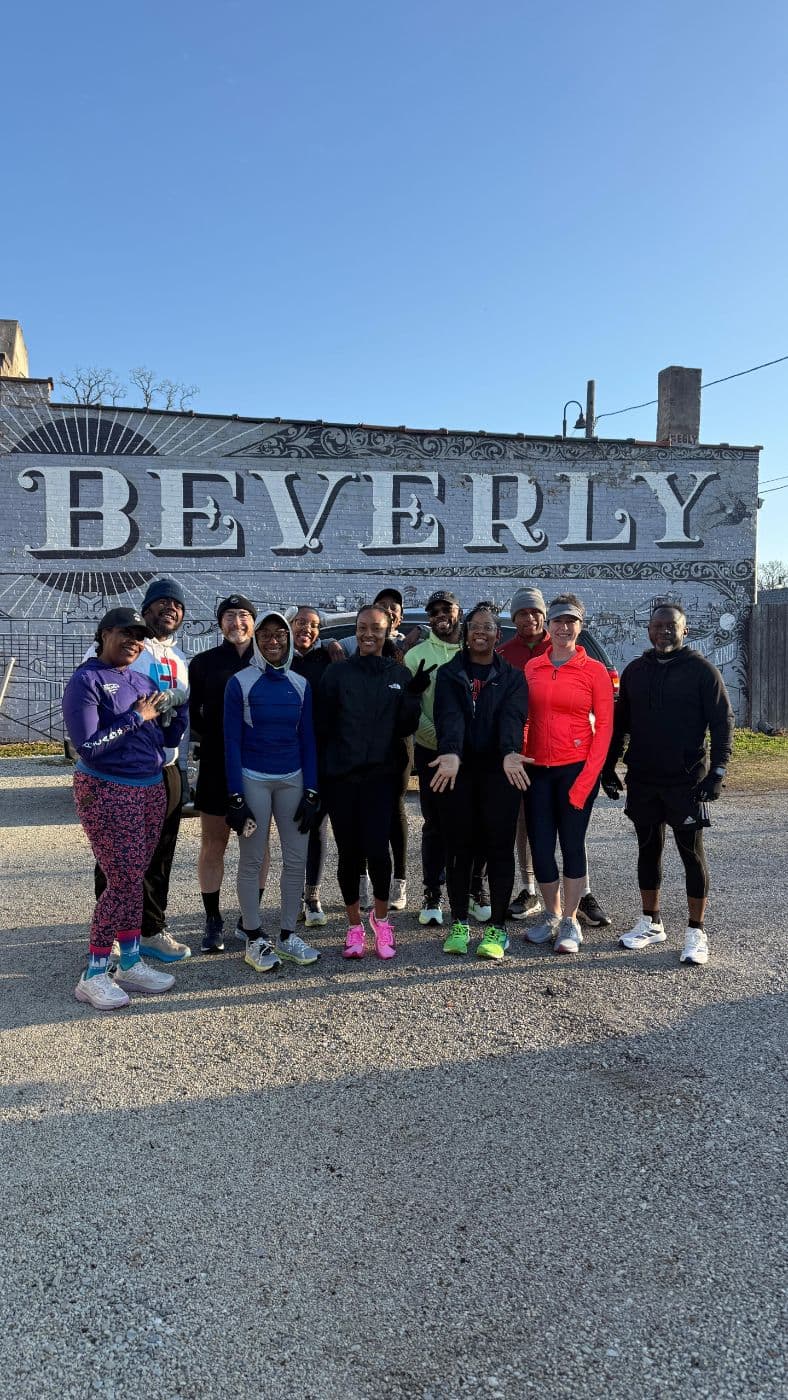
OnThe9 runs the lakefront regularly on Saturday mornings, usually from 31st Street south. The route changes every week and is posted on our Strava club. For more places to run, see our guide to South Side running routes.
Common questions
How long is the Chicago Lakefront Trail?
About 18 miles, from Ardmore Avenue on the North Side to 71st Street in South Shore.
Are there separate paths for runners and cyclists?
Along most of the trail, yes. The city split the trail into separate running and biking paths, finished in 2018, though a few short stretches are still shared.
Is the Lakefront Trail open in winter?
Yes, but sections can close during storms when waves wash over the path, and the water fountains are turned off in the colder months.